United Fast Food
  • Equipment
        • Beverage Dispensing
          • Fountain Beverage
          • Juice
          • Ice Makers & Bins
          • Slush/Granita
          • Frozen Carbonated Beverage
        • Coffee Brewing
          • Bean-to-Cup
          • Drip System
          • Espresso & Cappuccino
          • Cold & Nitro-Infused Coffee Dispensing
        • Food
          • Ovens
          • Hot Food Displays
          • Refrigerated Showcase/Open-Air Merchandisers
          • Rollers
          • Walk-in Coolers
  • Service
    • Installation
    • Preventive Maintenance
    • Reactive Service
  • Parts
  • Manufacturers
    • Cornelius
    • Schaerer
    • TurboChef
    • Curtis
    • Unox
    • Star
    • SandenVendo
    • Manitowoc
    • Ovention
  • About Us
    • Leadership Team
    • Partners & Vendors
    • Areas We Serve
    • Blog
  • Careers
  • Contact
  • Parts Request
  • Menu Menu

How to Design Walk-In Coolers and Beverage Equipment for Peak Summer Performance

Summer doesn’t just increase your sales volume. It increases the load on every piece of equipment in your store at the same time. Walk-in coolers work harder against higher ambient temperatures. Ice makers run near continuous production to keep up with fountain and frozen beverage demand. Beverage systems cycle more frequently as customer traffic peaks. If your equipment was designed and installed without accounting for how these systems interact under load, summer is when that gap becomes a service call.
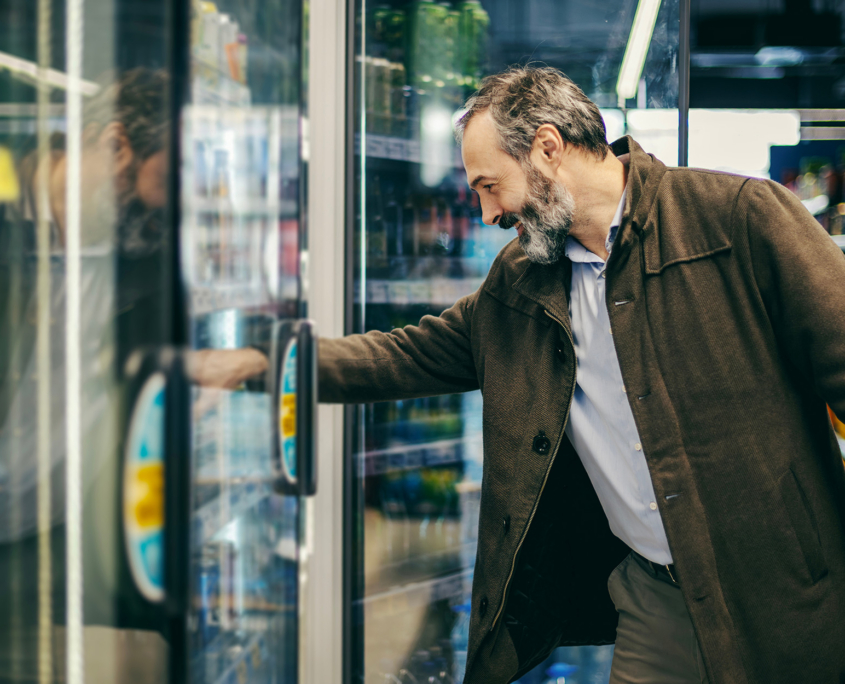
Operators who plan refrigeration, beverage equipment installation, and water filtration as a coordinated system avoid most summer performance problems before they happen. Operators who don’t often spend the busiest months dealing with them.

Why Isolated Equipment Installs Break Down in Summer

The most common foodservice design mistake in c-store operations isn’t bad equipment. It’s equipment selected and installed without considering the full system it’s part of.

A walk-in cooler installed without accounting for compressor placement and summer ambient temperatures will run at higher load than rated capacity on the hottest days of the year. An ice maker positioned in a poorly ventilated alcove will produce less ice precisely when production needs to be highest. A fountain beverage system without properly sized water filtration will develop mineral buildup faster as usage volume increases.

None of these are catastrophic failures on day one. They’re design oversights that compound over a season, showing up as rising energy costs, unplanned service calls, and equipment that ages faster than it should.

Effective convenience store foodservice design treats walk-ins, beverage systems, ice production, and water filtration as one infrastructure problem, not four separate purchasing decisions.

Walk-In Cooler Sizing for Summer Load

Convenience store walk-in cooler design that accounts for summer operating conditions looks different from a standard capacity calculation, and the gap matters. Ambient temperatures in a convenience store can rise significantly when doors are opening frequently during peak traffic hours. Restocking frequency increases as inventory turns faster. Every time a cooler door opens, the unit must recover, and that recovery takes longer and consumes more energy when the ambient air is warmer.

A walk-in cooler sized to your average load will be running at or near capacity on peak summer days. A unit sized for that peak load with appropriate buffer runs efficiently across the full range of operating conditions.

Compressor placement matters as much as capacity. Compressors reject heat, and where that heat goes affects ambient conditions for adjacent equipment. A commercial refrigeration system layout that places compressor exhaust near a fountain station or an ice maker head creates a feedback loop: the compressor heats the space, which forces the ice maker and beverage equipment to work harder, which generates more heat. Addressing this during planning is straightforward. Addressing it after installation is not.

Beverage Equipment Layout and Ice Machine Ventilation

Ice makers and bins have specific clearance requirements for airflow that are frequently overlooked during beverage equipment installation. Modular ice machine heads need adequate clearance on all sides to exhaust heat. Install an air-cooled unit in a tight enclosure or a back corner with poor airflow, and production capacity drops as ambient temperatures rise. Summer is exactly when you can’t afford that.

Drain placement is a related problem that rarely gets discussed before installation. A fountain dispenser, an ice maker, and a slush machine all produce drain water. If those drain lines aren’t planned together, you end up with floor drains in the wrong locations, drainage conflicts during high-volume service periods, or drains that don’t have adequate slope to clear the volume these systems produce on a busy afternoon in July.

Beverage equipment layout planning should account for service access as well as customer access. A technician who needs to pull a fountain dispenser for a repair during peak hours disrupts service if the unit was installed without adequate clearance behind it. Forty-five minutes of clearance planning at the design stage is worth several hours of service disruption later.

Water Filtration as a System Component, Not an Add-On

Water filtration for ice machines and fountain beverage systems is one of the most commonly underplanned elements of a c-store beverage installation. Filtration is often treated as optional or added after the fact, which is a mistake with real cost implications.

Hard water without proper filtration creates mineral scale buildup inside ice makers and beverage lines. In summer, when these systems are running at their highest volume, scale accumulates faster and causes problems sooner. Ice production slows as scale narrows internal passages. Fountain beverage dispensers develop inconsistent carbonation ratios. Equipment that would normally need descaling annually may need it twice.

The correct approach is to size water filtration for the combined draw of every system it serves, including ice, fountain, and any coffee equipment on the same water supply. Filter capacity should match the seasonal volume peak, not the average. Positioning filtration as a central utility serving multiple systems, rather than an afterthought bolted onto a single unit, is the difference between a system that runs clean all summer and one that doesn’t.

Plan for Service Access Before Installation, Not After

Every piece of equipment in a c-store foodservice setup will eventually need service. How accessible it is when that happens is determined at the design stage. Walk-in cooler evaporator coils need to be reachable for cleaning and inspection. Ice maker components need clearance for a technician to work efficiently. Fountain systems need to be serviceable without shutting down adjacent equipment.

This kind of clearance planning is easy to skip when the goal is fitting as much equipment as possible into a tight footprint. It consistently creates problems downstream. A preventive maintenance program is only as effective as the access it has to the equipment it’s maintaining.

UFFB works with convenience store operators across the Midwest to evaluate walk-in cooler performance, beverage equipment installation, ice capacity, and water filtration as a coordinated system. Whether you’re upgrading existing equipment or building a new foodservice program, our team helps you plan for peak load before it becomes a problem.

Start the Conversation →

How the Four-Wall Foodservice Process Addresses This

The issues above share a common cause: systems designed and installed in isolation, without visibility into how they interact under real operating conditions. Fixing them one at a time is expensive and never quite complete.

UFFB’s approach to convenience store foodservice design starts with the full picture. Layout, equipment selection, utility planning, and service access are worked through together before installation begins. That means walk-in cooler sizing is done with knowledge of where compressors will discharge heat. Ice maker placement is determined alongside ventilation clearance requirements. Water filtration is sized for the combined load of every connected system. Drain placement is mapped before floor work begins.

The result is a system where every component performs as designed, including in August, when ambient temperatures, traffic volume, and production demand are all at their peak.

Build a System That Holds Up When It Matters Most With UFFB

Equipment that’s right for your operation on an average Tuesday has to perform the same way on the hottest Friday afternoon of the year. That reliability doesn’t come from individual equipment specs. It comes from how the full system is planned, installed, and maintained.

Explore UFFB’s walk-in coolers and commercial beverage dispensing equipment, or contact our team to talk through how your current setup handles summer load and where the gaps are.

Share This Post

  • Share on Facebook
  • Share on X
  • Share on Pinterest
  • Share on LinkedIn
  • Share on Tumblr
  • Share on Vk
  • Share on Reddit
  • Share by Mail

More Like This

Coffee Beans Closeup On Dark Background

Mistakes to Avoid During Coffee Equipment Installations at C-Stores

Installations, Service
https://unitedfastfood.com/wp-content/uploads/2025/06/Coffee-Beans-Closeup-On-Dark-Background.jpg 1250 2000 Abstrakt Marketing /wp-content/uploads/2023/09/UFFB-Logo-CES-2.svg Abstrakt Marketing2025-06-17 07:55:522026-06-15 09:40:03Mistakes to Avoid During Coffee Equipment Installations at C-Stores
Worker brewing espresso

How Quality Coffee Brewing Equipment Boosts Sales at Convenience Stores

Installations
https://unitedfastfood.com/wp-content/uploads/2025/05/Worker-brewing-espresso.jpg 1250 2000 Abstrakt Marketing /wp-content/uploads/2023/09/UFFB-Logo-CES-2.svg Abstrakt Marketing2025-05-21 15:24:542026-06-15 09:40:03How Quality Coffee Brewing Equipment Boosts Sales at Convenience Stores

Categories

  • Bean to Cup
  • Beverage Dispensing
  • Beverage Equipment
  • Coffee Brewing
  • Cold Brew
  • Commercial Food and Beverage
  • Convenience Store Ovens
  • Food
  • Food Equipment
  • Ice Makers and Bins
  • Installations
  • Nitro Coffee Tap
  • Ovens
  • Refrigerated Showcase
  • Service
  • Slush
  • Uncategorized
  • Walk In Coolers
  • Walk-in Cooler Maintenance

Contact Us

"*" indicates required fields

Get In Touch

Phone
Call: (847) 616-0711
Toll-Free: (800) 928-0166
Fax: (847) 616-0712

Address
7250 Santa Fe, Suite B
Hodgkins, IL 60525

Equipment

Beverage Dispensing
Coffee Brewing
Food Prep and Display

Service

Installation
Reactive Repair
Preventative Maintenance

Website by Abstrakt Marketing Group ©
  • Link to Facebook
  • Link to LinkedIn
  • Careers
  • Sitemap
  • Privacy Policy
Link to: Cold Beverages in Convenience Stores That Drive Summer Sales and Traffic Link to: Cold Beverages in Convenience Stores That Drive Summer Sales and Traffic Cold Beverages in Convenience Stores That Drive Summer Sales and Traffic Link to: How to Select and Install a Slushie Machine for Your Convenience Store Link to: How to Select and Install a Slushie Machine for Your Convenience Store How to Select and Install a Slushie Machine for Your Convenience Store
Scroll to top Scroll to top Scroll to top

This site uses cookies. By continuing to browse the site, you are agreeing to our use of cookies.

AcceptLearn more

Cookie and Privacy Settings


How we use cookies

We may request cookies to be set on your device. We use cookies to let us know when you visit our websites, how you interact with us, to enrich your user experience, and to customize your relationship with our website.

Click on the different category headings to find out more. You can also change some of your preferences. Note that blocking some types of cookies may impact your experience on our websites and the services we are able to offer.

Essential Website Cookies

These cookies are strictly necessary to provide you with services available through our website and to use some of its features.

Because these cookies are strictly necessary to deliver the website, refusing them will have impact how our site functions. You always can block or delete cookies by changing your browser settings and force blocking all cookies on this website. But this will always prompt you to accept/refuse cookies when revisiting our site.

We fully respect if you want to refuse cookies but to avoid asking you again and again kindly allow us to store a cookie for that. You are free to opt out any time or opt in for other cookies to get a better experience. If you refuse cookies we will remove all set cookies in our domain.

We provide you with a list of stored cookies on your computer in our domain so you can check what we stored. Due to security reasons we are not able to show or modify cookies from other domains. You can check these in your browser security settings.

Other external services

We also use different external services like Google Webfonts, Google Maps, and external Video providers. Since these providers may collect personal data like your IP address we allow you to block them here. Please be aware that this might heavily reduce the functionality and appearance of our site. Changes will take effect once you reload the page.

Google Webfont Settings:

Google Map Settings:

Google reCaptcha Settings:

Vimeo and Youtube video embeds:

Accept settingsHide notification only